




Five Fascinating Facts About Dunkirk
The story of Dunkirk is often summed up as a dramatic escape - but the facts about Dunkirk are even more surprising when you look beyond the headlines. From the make-up of the British Expeditionary Force to the sheer scale of the defensive perimeter, the Battle of Dunkirk is packed with detail that brings the “Miracle” into sharper focus.
If you want to go beyond reading Dunkirk facts and actually stand where history happened, the guided Dunkirk & Fortress Europe tour follows the retreat to the coast, takes you to the evacuation beaches and the East Mole, and then explores the later “Fortress Europe” story through bunkers and V-weapon sites.
Dunkirk fact file: 5 fascinating facts you might not know
1) The British Expeditionary Force wasn’t “all conscripts” - it was built from Regulars and Territorials
By 1939, Britain was introducing conscription, but many of the troops who formed the British Expeditionary Force (BEF) in France were drawn from the professional Regular Army and the Territorial Army, Britain’s long-established volunteer reserve. That mix mattered: Regulars brought long-service experience, while Territorial units dramatically increased Britain’s deployable strength at speed.
By spring 1940, the BEF in theatre had grown to hundreds of thousands of men (often cited at around 390,000), making the scale of the later evacuation even more extraordinary.
On Leger’s Dunkirk tours, you can track the retreat and fighting that pushed these mixed units back toward Dunkirk, setting the scene for everything that follows.
2) The Dunkirk perimeter was huge - and it leaned on canals across France and Belgium
One of the lesser-known facts about the Battle of Dunkirk is that the evacuation succeeded only because Allied forces held a defensive pocket around Dunkirk long enough to keep escape routes open. The outer perimeter is often described as roughly 25 miles (40 km) long and about 8 miles (13 km) deep, using canals and waterways as natural barriers.
It wasn’t just a line on a map either: the perimeter stretched toward the Belgian frontier, showing how the Battle of Dunkirk spilt across borders - and why the “Dunkirk pocket” is best understood as a region, not a single beach.
3) Operation Dynamo rescued around 338,000 troops in just nine days
The headline entry in any Dunkirk fact file is the scale and speed of the evacuation. Operation Dynamo ran from 26 May to 4 June 1940 and brought roughly 338,000 British and Allied troops back across the Channel. The operation became a huge psychological lift at a moment when the Battle of France was collapsing.
That number is even more striking when you remember this wasn’t a tidy, planned withdrawal - it was an urgent rescue under pressure, with ports damaged, supply lines cut, and enemy attacks continuing throughout.
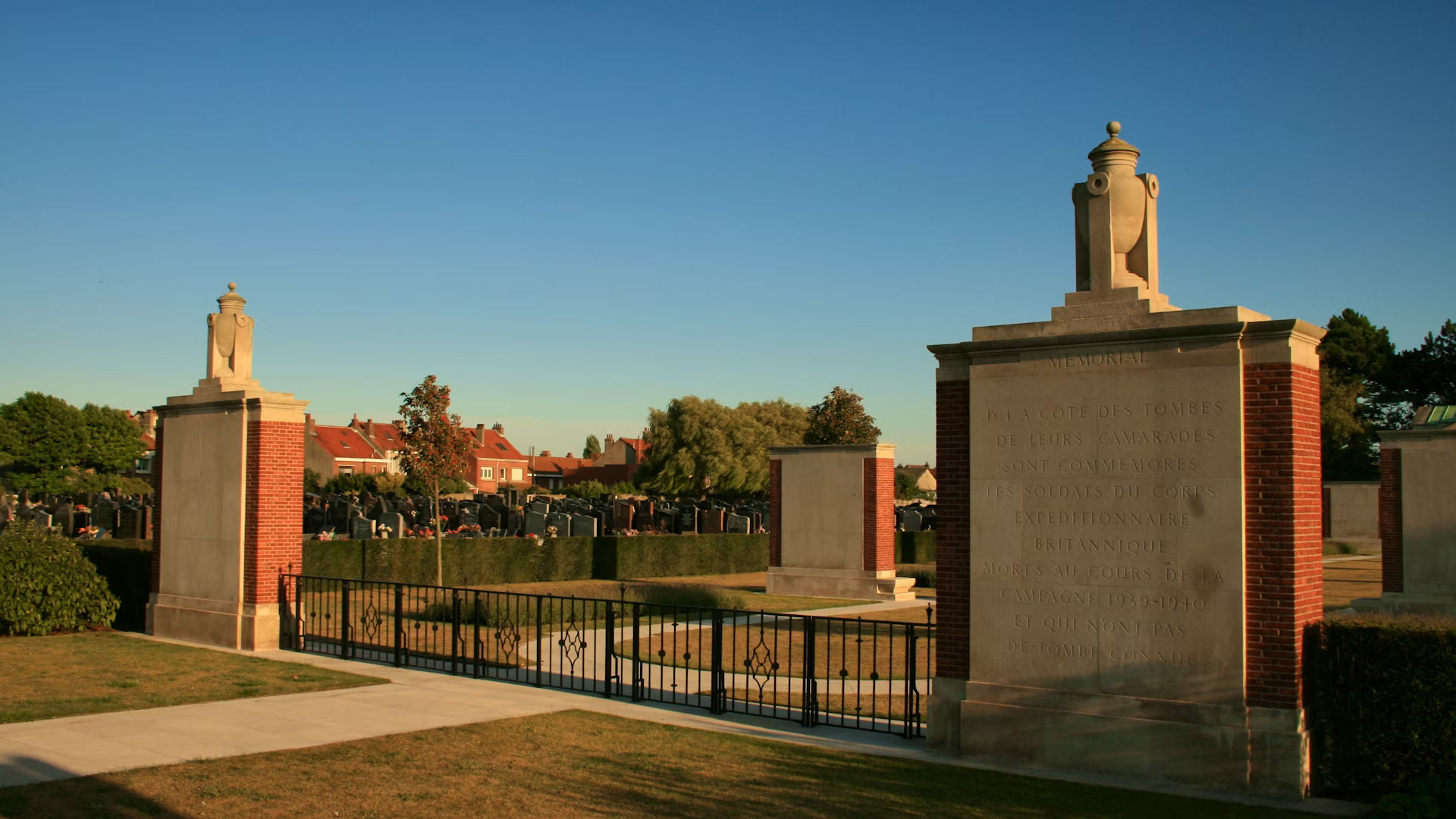
4) The East Mole wasn’t just a backdrop - it was the evacuation’s critical “loading platform”
Pop culture often focuses on the “little ships”, but one of the most important facts about the Battle of Dunkirk is how vital the East Mole became. Dunkirk’s beaches are shallow, which made it difficult for large warships to come close. That’s why troops were directed to embark from the long breakwater (the East Mole), which allowed far faster boarding than wading out from the shoreline alone.
This detail matters because it turns Dunkirk from a vague “beach rescue” story into something more tangible: a specific piece of infrastructure became a lifeline - and it still helps visitors understand how the evacuation functioned in practice.
5) Dunkirk’s WW2 story didn’t end in 1940 - it became part of “Fortress Europe”
A final entry in this Dunkirk facts list is that the region’s wartime story stretches far beyond the evacuation. After 1940, the area was drawn into Germany’s wider defensive strategy - the “Fortress Europe” mindset - including coastal defences, bunkers, and weapons sites designed to deter or punish any Allied return.
This is where Dunkirk links to the broader northern France story: the same coastline that saw evacuation later became heavily fortified, and the surrounding region contains major remnants of that later phase of the war.
Consider a visit to Dunkirk with Leger Holidays, including stops at the Blockhaus at Éperlecques (V2 site) and a V1 site near Morbecque, as well as other defence locations and museums.
Key takeaways
- The BEF at Dunkirk was a blend of Regular Army and Territorial formations, not a single “type” of force.
- The Allied defence relied on a large canal-based perimeter - roughly 25 miles long and 8 miles deep - stretching toward the Belgian frontier.
- Operation Dynamo (26 May–4 June 1940) evacuated around 338,000 Allied troops.
- The East Mole was a crucial evacuation “platform” because large ships couldn’t easily load from shallow beaches.
- Dunkirk’s wartime landscape also includes the later Fortress Europe story - bunkers and V-weapon sites that still shape the region today.
Discover Dunkirk with Leger Holidays
Ready to turn these facts about Dunkirk into something you can truly picture? Explore the story on the ground with Leger Holidays’ specialist-guided Dunkirk & Fortress Europe battlefield tour - from the evacuation beaches and East Mole to the wider “Fortress Europe” sites that explain what happened next.
View the tour and dates here: Dunkirk & Fortress Europe