




Why Visiting the WW1 Battlefields Still Matters Today, with Battlefield Guide Andrew Thornton
More than a century after the guns fell silent, visiting the WW1 battlefields of the Western Front still draws thousands of people every year. These landscapes are more than fields and memorials - they are touchstones of family history, national identity and human endurance. For WW1 Battlefield tour guide Andrew Thornton, the Great War is far more than a distant chapter in a textbook; it remains a living connection shaped by memory, legacy and the profound personal encounters that show why these places still matter today.
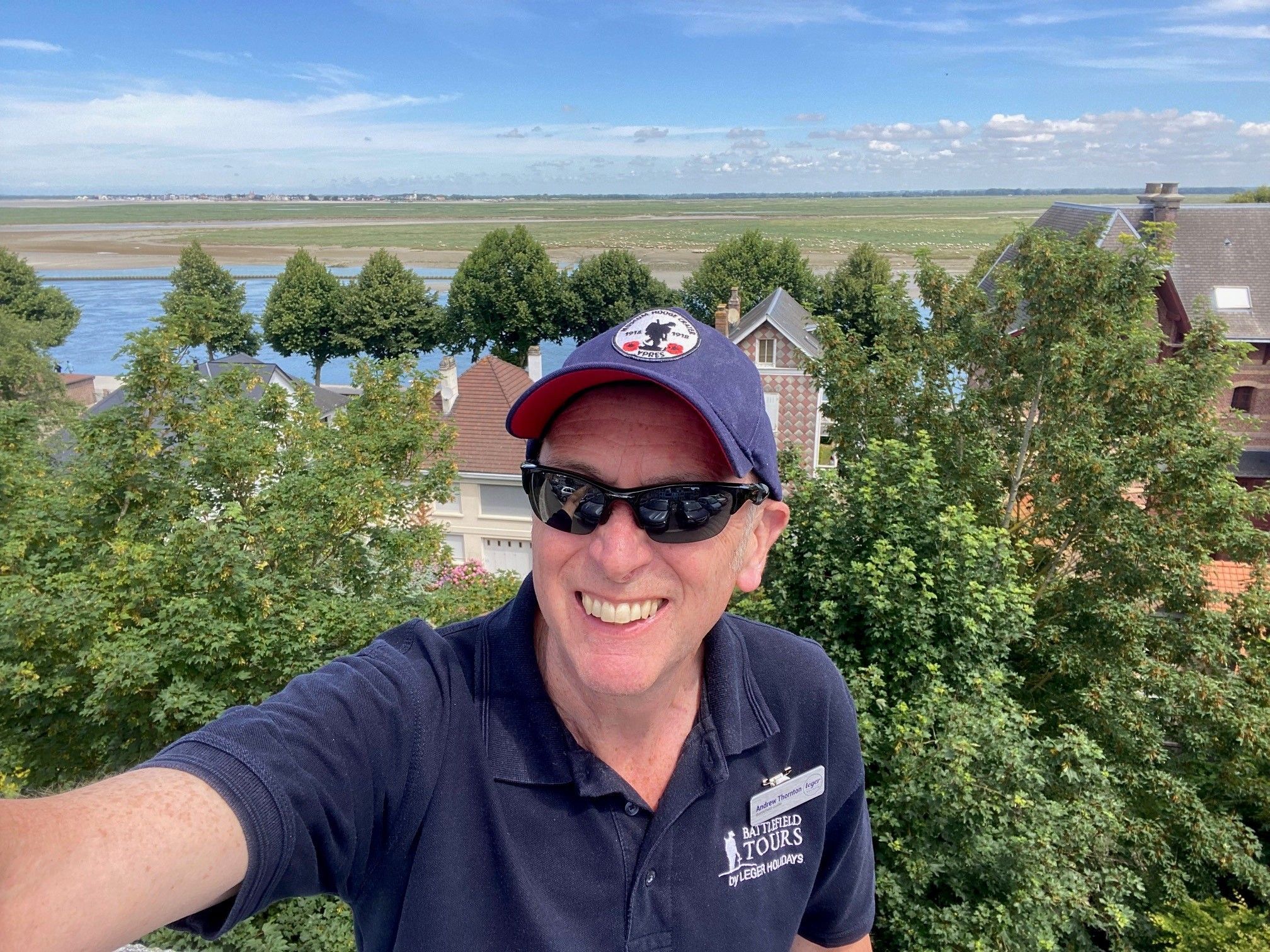
A Family Thread into the Past
“My interest in the First World War stems from my paternal grandfather who lived with us and was wounded at the Battle of Arras in 1917,” Andrew recalls. “He left me with memories of him singing the old soldiers’ songs. His description of chasing Germans through a trench with cries of ‘Tommy!’ and ‘Jerry!’ was very funny to a 10-year-old.”
But the memories run deeper than stories. His grandfather’s visible bullet wounds in his right arm left an imprint that never faded. His maternal grandfather also served as a stretcher bearer, surviving the war but leaving behind fewer records. Together, their experiences sparked a lifetime fascination and ultimately led him to guiding.
A Moment That Changed Everything
In Andrew’s years guiding Leger Battlefield Tours, one memory stands above all others – an unexpected detour that became a life-changing moment.
On the 4-day All Quiet on the Western Front tour, “a family had brought their dad to visit his grandfather… who was killed on the first day of the Battle of Arras.” Their 4-day tour wasn’t scheduled to visit Arras (only the 5-day version), but a motorway accident forced the group to reroute – unbeknown to the dad.
“When he awoke, we were outside Tilloy Cemetery, and what followed was like the opening scene from Private Ryan” – a man kneeling at his grandfather’s grave, a hand on his shoulder, tears flowing freely.
“It was at this point I realised I wasn’t just a Battlefield Guide, but I actually made a real difference to people. Very humbling.”
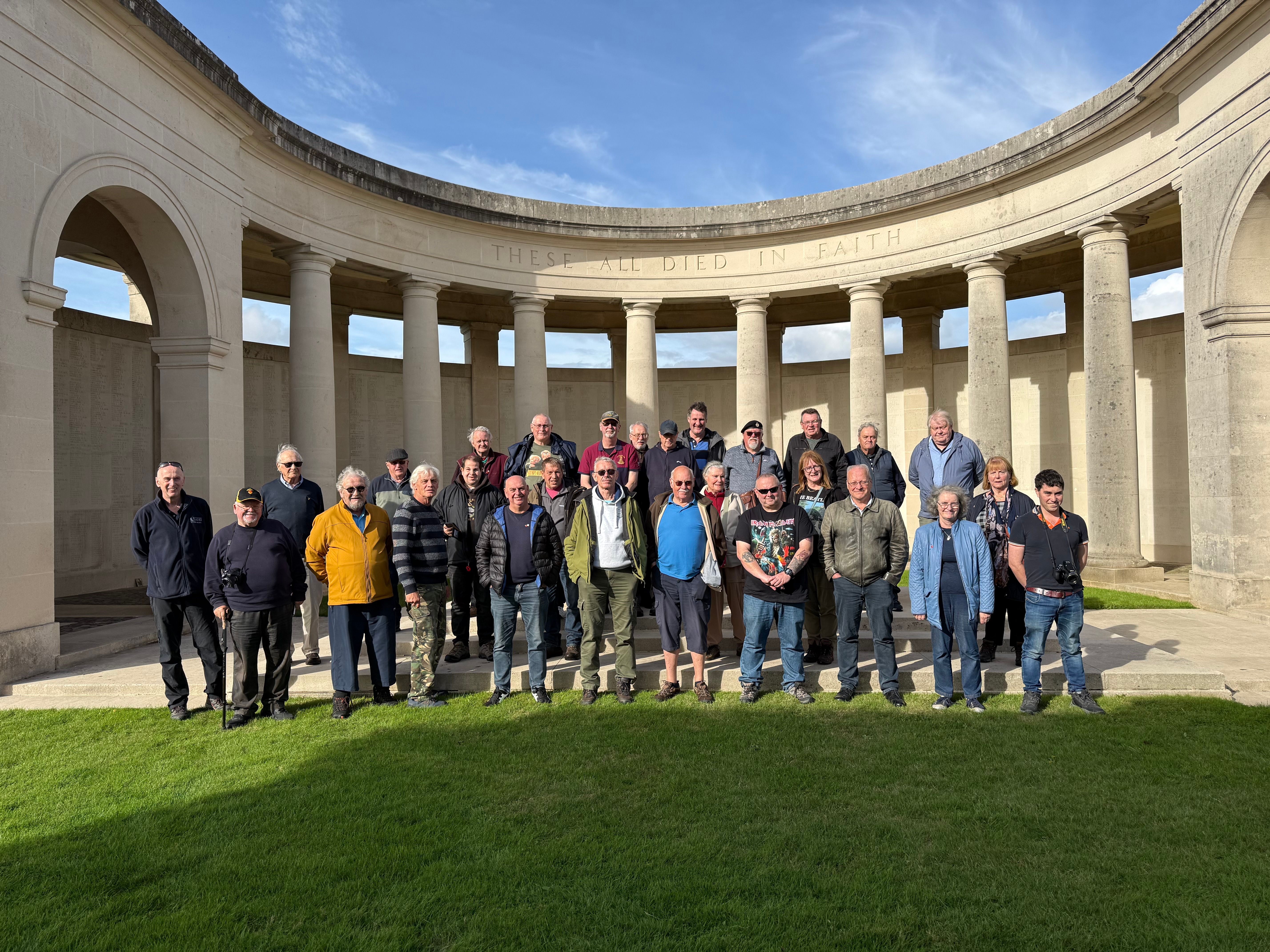
Beyond the Guidebooks
From introductory journeys designed for those taking their first steps into First World War history, to focused tours that follow the course of specific battles, Leger’s programme offers something for every level of curiosity. Visitors can choose broad overviews that bring the key moments of the Western Front to life, or dive deeper into specialist itineraries that uncover lesser-known stories, remote positions and the hidden geography of the conflict.
With a Specialist Guide accompanying throughout, each tour offers perspectives you simply can’t gain from books or online research alone. Their knowledge brings context to every trench line, memorial and ridge – pointing out details that are easy to overlook and sharing personal stories that link the past to the present. They help visitors understand not just what happened, but why it mattered, and how the consequences of those events still ripple through families and nations today. It’s this human insight, layered over the physical terrain, that transforms a battlefield visit into something far deeper than a history lesson.
The Western Front is vast, and even for seasoned visitors, there is always more to learn.
“The First World War is a huge subject and it’s important to explore it fully,” Andrew explains. His top recommended tours for travellers wanting something different include the Reims & Verdun and the End of the Western Front. The End of the Western Front is truly unique, offering “the opportunity to put one foot in Kilometre Zero and one in neutral Switzerland. Absolutely amazing… and the fact that the tour does not include British involvement makes for a very different and very special experience.”
The Lasting Impact of the Great War
With the First World War slipping ever further into history, fewer people have a direct family link. Yet its pull remains powerful – so, what makes it so significant and compelling for people today?
“For me, it’s the loss of life – industrial warfare on an unprecedented scale,” he says. “Loss of life on a scale that affected every family in Britain.” Even if a family was not directly affected by a casualty of war, then it would have been affected by the changes in domestic life at home. Thanks to digital archives, those without a documented family connection are now finding them, showcasing why it is vital that we keep returning to these landscapes, where the scale of sacrifice becomes something we can feel rather than simply read about.
Why We Still Go
Visiting the battlefields today is about more than military history. It’s about standing where stories were shaped, where ordinary people faced the extraordinary, and where families continue to find answers – or closure – more than 100 years later.
These sites remind us that history isn’t just something that happened. It’s something that happened to people. People whose names are carved in stone. People whose stories are still being discovered. People who still matter.
And as Andrew’s own experience shows, even now, these places have the power to move us and connect us to parts of history we might otherwise allow to fade.

Key takeaways
- Visiting the WW1 battlefields today offers a personal connection to history that books and documentaries simply can't replicate.
- The Western Front remains the heart of WW1 remembrance, with key sites across France and Belgium including Arras, the Somme, Ypres and Tyne Cot Cemetery.
- A WW1 Battlefield Guide like Andrew Thornton brings context, personal stories and lesser-known detail that transform a visit into something far deeper than a history lesson.
- Family history is a powerful driver - digital archives now help visitors trace ancestors who served, making these journeys increasingly meaningful for new generations.
- Standout tours include Reims & Verdun and the End of the Western Front, the latter offering the rare chance to stand at Kilometre Zero on the Swiss border.
How to Visit WW1 Battlefields
Some places ask to be visited in person. For those moved to explore further, our collection of First World War tours offers the chance to stand on this hallowed ground, led every step of the way by Battlefield Guides like Andrew who bring its stories vividly to life.
Browse battlefields tours from Leger Holidays and book today.